Mind Honey Pro Official Website › Blog › Alcohol And The Vessel Story
Alcohol And The Vessel Story This Panel Leans On
Two arginine rows and two citrulline rows on this label are printed on one mechanism: relax the vessel wall, let more blood move, and more may reach the brain behind it. Alcohol reaches that exact same vessel lining, through the exact same nitric-oxide chemistry, and it does not push in only one direction. Reading what the vascular literature says about a drink is a natural follow-on from reading what it says about this panel, and the two bodies of research turn out to disagree with each other almost as much as they disagree with themselves.
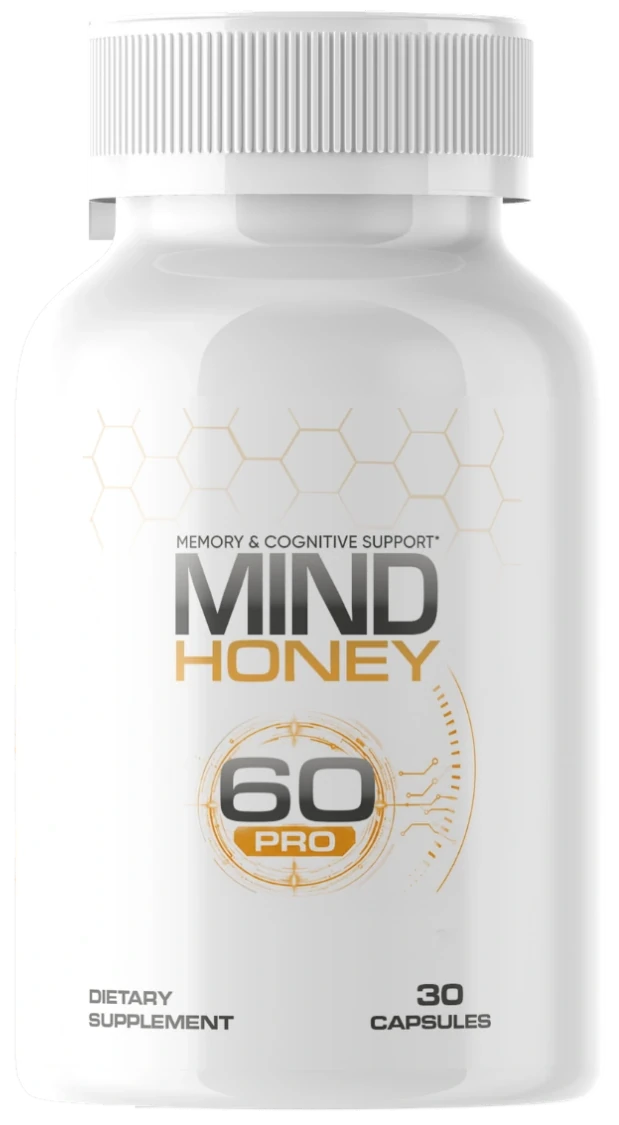
- Two arginine rows and two citrulline rows on this label are printed on a vessel-relaxing, nitric-oxide premise, covered in full in the article on that pathway.
- A 2023 lab study found ethanol has a biphasic effect on the vessel lining: a moderate exposure calmed inflammatory markers, a heavy exposure activated them, and both raised oxidative stress and nitric-oxide synthase activity, more so at the heavy dose.
- A 2003 review reached a similar shape from human data: light-to-moderate drinking tracks with lower cardiovascular risk, heavy drinking raises it, and blunted vessel responses have been measured in people who drink heavily.
- Alcohol is also an established, dose-related cause of higher blood pressure, and endothelial nitric-oxide loss is one of the mechanisms proposed for it.
- The cognition literature is genuinely split. One cohort found moderate, regular drinking tracked with higher cognitive scores in older adults; another found light drinking tracked with lower scores once the comparison group was chosen more carefully; a 2025 autopsy study tied heavy and former-heavy drinking to more vessel damage in brain tissue and worse cognition, with the vessel damage explaining the link statistically.
- None of this is a finding about Mind Honey Pro. It is what is known about alcohol and the same vessel lining this panel's vascular rows are aimed at.
What four of these rows are actually arguing
L-Arginine (base), L-Arginine AKG 2:1 Extract, L-Citrulline HCl and L-Citrulline Malate sit on this panel because both amino acids can feed the same enzyme system, nitric oxide synthase, that keeps blood-vessel walls relaxed. Relaxed vessels move more blood; more blood moving through tissue that needs it, the reasoning goes, is a plausible route to a benefit somewhere downstream. The article on that pathway works through the mechanism and the trial evidence for it in full, and this one leans on it rather than repeating it.
What that earlier article does not cover is what else touches the same lining. Alcohol is the most commonly consumed substance that does, and it does so through a mechanism close enough to this panel's own premise that it is worth reading on its own terms.
A 2023 lab study: two doses, two directions
A 2023 paper in Alcohol, Clinical and Experimental Research treated human coronary artery endothelial cells with ethanol at two concentrations: one matched to low-risk or moderate drinking, one matched to high-risk or heavy drinking, plus ethanol's breakdown product acetaldehyde.
The moderate exposure improved several markers of the cell layer's barrier function, reduced inflammatory cytokine output, and cut down monocyte adhesion, a step in the process that narrows and stiffens vessels over time. The heavy exposure did close to the opposite on every one of those markers, and acetaldehyde behaved like the heavy-dose group. Both doses raised oxidative stress and nitric-oxide synthase activity, the heavy dose more than the moderate one, which the authors read as the enzyme working harder under strain rather than working better.
This is endothelial cells in a dish, not a person, and it cannot tell you what a given drink does to your own vessels over years. What it can do is offer a mechanism for something researchers had already noticed in whole populations: alcohol's cardiovascular relationship is not a straight line, and dose is the reason.
An older review reaches a similar shape
A 2001 review in Clinical and Experimental Pharmacology and Physiology had already laid out the same pattern from a different angle, years before that lab study. Regular light-to-moderate drinking tracked with lower rates of coronary artery disease and ischaemic stroke in the population data available at the time; heavy drinking raised the risk of both, plus haemorrhagic stroke. In animal work, low doses of alcohol increased nitric oxide release and improved vessel relaxation, while higher doses blunted it. The human evidence at that point was thinner: blunted flow-mediated dilation, a standard bedside measure of vessel responsiveness, had been reported in people who drink heavily, but short interventions to raise or lower intake in the moment did not reliably move the measurement either way.
Put the 2001 review and the 2023 lab study side by side and the shape holds up across two decades of very different methods: dose is doing the work, not alcohol as a single category.
Alcohol, blood pressure, and the same chemistry
A 2014 paper in the World Journal of Cardiology surveyed the mechanisms behind alcohol-induced hypertension directly. Several pathways were on the list: a shift in nervous-system balance, blunted baroreceptor reflexes, higher cortisol, more reactive vessels, and, specifically, oxidative injury to the endothelium that suppresses nitric-oxide production. The paper singled that last route out as a major contributor. Its practical recommendations were reducing alcohol intake and physical activity, with ACE inhibitors or angiotensin-receptor blockers as the more effective pharmacological options where treatment is needed.
This is the same nitric-oxide chemistry the arginine and citrulline rows on this panel are aimed at, working in the opposite direction. The article on blood pressure and memory covers what a high reading itself does to memory risk over time; this is a narrower and more mechanical point, about one of the ways a drink can move that reading in the first place.
Where the cognition studies disagree
If the vascular story were the whole picture, a reader might expect the cognition literature to line up neatly behind it. It does not.
A study of 1,624 older community-dwelling adults in the Rancho Bernardo Study found that greater amount and frequency of alcohol intake tracked with better global and executive function, and that moderate, infrequent drinkers scored better on visual memory than either non-drinkers or heavy daily drinkers. The authors' own reading was cautious: that a modest cognitive benefit might be achievable at low intake levels without the harms of heavier drinking.
A separate analysis of the Swedish Twin Registry took direct aim at a known flaw in that kind of comparison: non-drinkers are not a neutral baseline, because some of them have already quit for health reasons, which biases the comparison group toward worse health. When the author excluded non-drinkers entirely and looked only at a dose-response relationship among people who do drink, higher midlife alcohol intake tracked with lower scores on a standard cognitive screen and on episodic memory twenty-five years later, at every level tested, including low ones. Her conclusion ran directly against the more commonly cited finding: light drinking did not appear protective once the comparison was built this way.
Four studies, four different angles, side by side
| Study | What it looked at | What it found |
|---|---|---|
| 2023 lab study, endothelial cells | Moderate vs. heavy ethanol exposure, direct measurement | Biphasic: moderate calmed several inflammatory markers, heavy activated them. |
| 2001 review, human and animal data | Alcohol and vessel-lining function generally | Same dose-shaped pattern, with weaker and more mixed human evidence. |
| Rancho Bernardo cohort, 1,624 adults | Amount and frequency of drinking vs. cognitive test scores | Moderate, regular drinking associated with higher scores on several measures. |
| Swedish Twin Registry, 486 adults | Midlife drinking vs. cognition 25 years later, non-drinkers excluded | Dose-response decline at every level tested, including low ones. |
Two cardiovascular studies point the same direction on dose. Two cognitive studies, using different methods on different populations, do not agree with each other at all.
Mind Honey Pro does not adjust for what else is on the vessel side of the ledger
The label prints seven amounts and nothing about intake, drinking or any other lifestyle factor that shares the same nitric-oxide chemistry. Reading the vessel story in full, on both sides, is what makes the printed amounts useful rather than decorative.
Two bottles $158 · six bottles $294 · 180-day money-back guarantee
Order Mind Honey ProOne capsule a day · 30 per bottle
The 2025 study that looked at brain tissue directly
A 2025 study in Neurology took a more direct route than a questionnaire. It examined brain tissue from 1,781 people through a population-based autopsy program, classifying them as never, moderate, heavy or former-heavy drinkers, and scoring their tissue for several markers of vascular and Alzheimer's-type pathology alongside a standard cognitive rating taken before death.
Moderate, heavy and former-heavy drinking were all associated with hyaline arteriolosclerosis, a stiffening and narrowing of small brain vessels; heavy and former-heavy drinking were also associated with neurofibrillary tangles, one of the two hallmark lesions of Alzheimer's disease. Former-heavy drinking specifically was associated with a lower brain-mass ratio and worse cognitive scores. When the researchers tested whether the small-vessel damage explained the link between alcohol and cognition statistically, it did: the association between alcohol consumption and impaired cognition was fully accounted for by that vascular pathology.
This is a cross-sectional autopsy study, not a trial, and it cannot say how long a pattern of drinking has to run to produce this or whether it reverses on stopping. What it adds is a plausible physical route from a drink to a vessel to a cognitive score, using the same small-vessel plumbing the arginine and citrulline rows on this panel are aimed at from the other direction.
Where the vessel logic and a drink actually overlap
Put the mechanism and the outcome studies together and a narrow, defensible overlap appears. This panel's vascular rows are built on the idea that supporting nitric-oxide availability in vessel walls is worth doing. Alcohol, at moderate levels, appears in some studies to support the same chemistry; at heavy levels, in study after study, it works against it, raises blood pressure through a related route, and in one recent, methodologically direct study tracks with measurable vessel damage in brain tissue that statistically explains a cognitive difference.
The overlap is not a reason to treat a capsule and a drinking habit as equivalent or interchangeable levers on the same system. It is a reason to read one alongside the other rather than in isolation, particularly for a reader already paying attention to blood pressure or vascular risk for other reasons.
What this article is not arguing
- It is not arguing that any amount of alcohol is required, beneficial, or risk-free. The cognitive literature above disagrees with itself on that point, and the safest reading is that the question remains open.
- It is not arguing that Mind Honey Pro offsets, corrects for, or counteracts anything alcohol does. No study cited here tested this product, or any product, against alcohol's vascular effects.
- It is not arguing that people who already drink heavily can substitute a capsule for medical advice about it. The 2014 hypertension review names reducing intake, not a supplement, as the first-line step.
- It is not arguing that light or moderate drinking is safe for everyone. Pregnancy, certain medications, liver disease and a personal or family history of alcohol problems all change the calculation in ways none of these studies address.
A short, practical list
- If blood pressure is already a concern, alcohol is one of the levers worth discussing with a clinician, alongside the ordinary ones of salt, weight and activity.
- Heavy drinking and a vascular-support supplement are not offsetting habits. The literature above treats them as pulling in different directions, not cancelling out.
- The cognition studies disagree partly because of how the comparison group is built. A single favourable headline about moderate drinking is not the end of that argument, and neither is a single unfavourable one.
- Vessel damage found at autopsy is a slow-accumulating thing. None of this literature describes what a single drink, or an occasional one, does on its own.
References
- Rajendran NK, Liu W, Cahill PA, Redmond EM. Alcohol and vascular endothelial function: Biphasic effect highlights the importance of dose. Alcohol Clin Exp Res (Hoboken). 2023;47(8):1467-1477. PMID 37369447. https://pubmed.ncbi.nlm.nih.gov/37369447/
- Puddey IB, Zilkens RR, Croft KD, Beilin LJ. Alcohol and endothelial function: a brief review. Clin Exp Pharmacol Physiol. 2001;28(12):1020-4. PMID 11903307. https://pubmed.ncbi.nlm.nih.gov/11903307/
- Husain K, Ansari RA, Ferder L. Alcohol-induced hypertension: Mechanism and prevention. World J Cardiol. 2014;6(5):245-52. PMID 24891935. https://pubmed.ncbi.nlm.nih.gov/24891935/
- Reas ET, Laughlin GA, Kritz-Silverstein D, Barrett-Connor E, McEvoy LK. Moderate, Regular Alcohol Consumption is Associated with Higher Cognitive Function in Older Community-Dwelling Adults. J Prev Alzheimers Dis. 2016;3(2):105-113. PMID 27184039. https://pubmed.ncbi.nlm.nih.gov/27184039/
- Hassing LB. Light Alcohol Consumption Does Not Protect Cognitive Function: A Longitudinal Prospective Study. Front Aging Neurosci. 2018;10:81. PMID 29632484. https://pubmed.ncbi.nlm.nih.gov/29632484/
- Justo AFO, Paradela R, Gomes Goncalves N, et al. Association Between Alcohol Consumption, Cognitive Abilities, and Neuropathologic Changes: A Population-Based Autopsy Study. Neurology. 2025;104(9):e213555. PMID 40203226. https://pubmed.ncbi.nlm.nih.gov/40203226/