Mind Honey Pro Official Website › Choosing a supplement
Choosing a supplementChoosing A Memory Supplement: Seven Checks
Seven questions answerable from a label and a website in about five minutes: is an amount printed for every active, is the salt named, does each amount sit inside the range its trials used, was the evidence collected in people like you, does the front of the bottle agree with the back, is there a real refund route, and does the label stay inside what a supplement may claim.
Seven questions to put to any memory supplement, asked of this one last.
Why a checklist beats a brand comparison
What seven fixed questions can do that a ranked list of brands cannot.
Brand comparisons age badly and are almost always written by somebody selling one of the brands. A checklist survives because the questions do not change when the products do, and because you can answer them standing in an aisle with a bottle in your hand.
Every check below is answerable from information a company has already published. None requires a laboratory, a subscription or a degree, and none asks you to judge whether an ingredient works. That question belongs to the companion guide and to the trials it cites.
What the seven measure is whether a label tells you enough to hold it to account. That is a lower bar than efficacy, and a great deal of this category fails it at the first question.
The seven checks
Seven questions, each answerable from the label and the seller’s own pages.
1. Is an amount printed for every active?
A proprietary blend gives one total for several ingredients, which means no individual amount can be compared with any trial. The blend total is a ceiling and nothing more: the first name on the list could account for almost all of it. Where a panel prints a figure per row, every other check here becomes possible.
2. Is the salt or the form named?
Arginine base and arginine alpha-ketoglutarate are different ingredients with different pharmacokinetics, and citrulline and citrulline malate were compared head to head in a randomised crossover for exactly that reason. A panel reading only “arginine complex” has left out the part that decides which research applies.
3. Does each amount sit inside the range its trials used?
This is arithmetic once check one passes. Citrulline needs 3 g twice daily before plasma arginine moves at all. Beta-alanine protocols run 4 to 6 g a day. The arginine cognition pilot used 6.4 g. An amount far below the researched figure is a name on a panel rather than a dose.
4. Was the evidence collected in people like the buyer?
Most of the amino acid literature here was run in trained young men measuring sprint times and handgrip strength. A product sold to a 62-year-old for memory needs at least one trial in that population, and in this category very few ingredients have one.
5. Does the front of the bottle agree with the back?
The front is marketing and the back is a regulated panel, and where they disagree the back is right. Read the servings per container against anything the front implies about quantity, and read the claim on the front against the amounts on the panel behind it.
6. Is there a refund route with a telephone number and an address?
A stated window, a number that is answered, a published return address and a written procedure. Where the only route is a contact form, the practical value of a guarantee is whatever the company decides later, and in an unregulated category the refund is the only protection a buyer can actually enforce.
7. Does the label stay inside what a supplement may claim?
Structure and function claims only: supports, promotes, helps maintain. A product promising to restore memory, reverse decline or prevent dementia has broken the rule governing the whole category, and a company casual about that rule is not a safe bet on sourcing either.
Scoring Mind Honey Pro against all seven
The same seven questions, answered about the product this website sells.
| Check | Verdict | The evidence for the verdict |
|---|---|---|
| 1. An amount for every active | Pass | All 7 rows carry their own figure and there is no proprietary blend. This is the best thing about the label and it is why the rest of this table can be filled in at all. |
| 2. The salt or form named | Pass | Arginine base and arginine AKG 2:1 are printed as separate rows, citrulline HCl and citrulline malate likewise, the niacin is in NE and the calcium is named as carbonate. That is more precision than most of this aisle offers. |
| 3. Amounts inside the researched range | Fail | Five of the seven sit one to two orders of magnitude below their trials. Beta alanine is 40 mg against 2.4 g a day; the citrulline total is 200 mg against a 3 g twice-daily floor. |
| 4. Evidence in the right population | Partial | The niacin row has an observational cohort in older adults and beta-alanine has a randomised trial in 60 to 80-year-olds. The arginine evidence is one 35-completer pilot and the citrulline cognition evidence is a mouse study. |
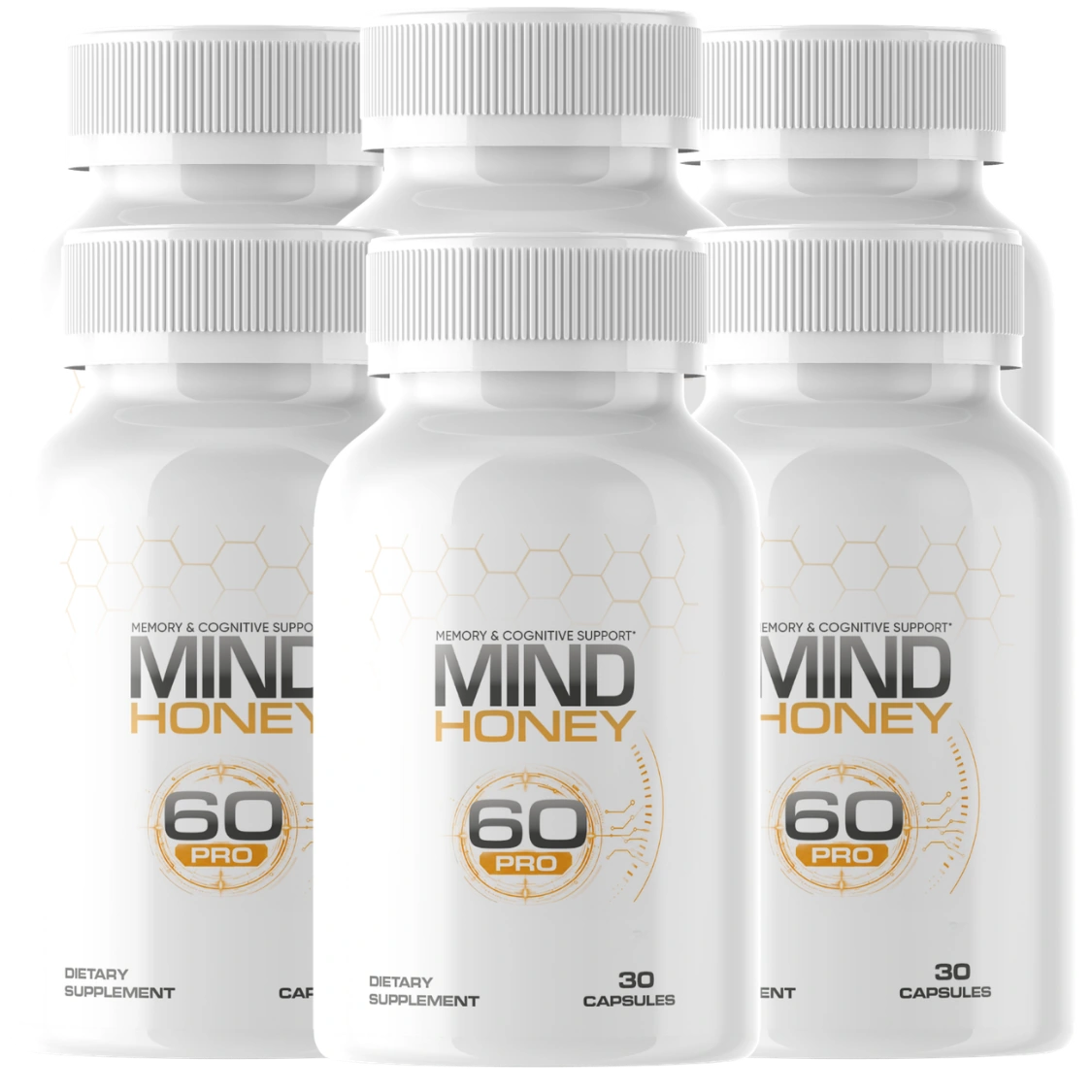
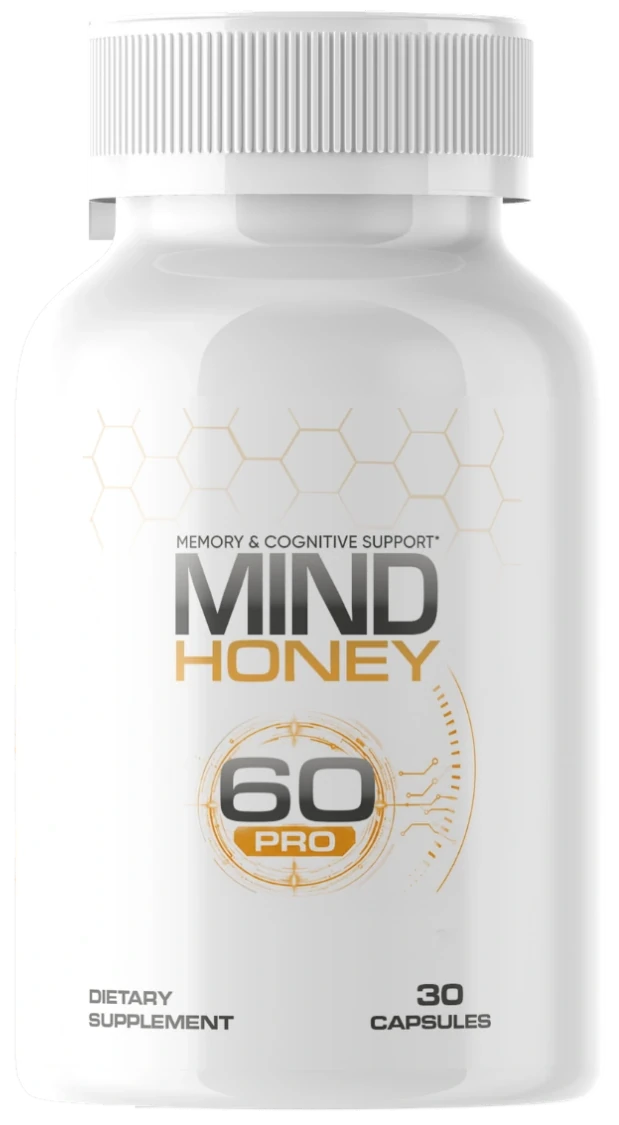
| 5. Front agrees with the back | Fail | The artwork reads MIND HONEY over 60 PRO. The panel says Servings Per Container 30 and the front says 30 CAPSULES. The 60 is part of the product name and a shelf shopper will read it as a count. |
| 6. A real refund route | Pass | 180 days from purchase on every pack, opened bottles included, with +1 (302) 200-3480, a written five-step procedure and a return address at 1441 Broadway, Floor 5, New York, NY 10018, USA. |
| 7. Claims inside the rules | Pass | One structure and function line on the bottle: memory and cognitive support. Nothing on the artwork goes past it. |
Four passes, one partial and two outright failures. The failures are the reason the passes are worth reading.
The two rows it fails, in detail
What exactly is wrong, why it cannot be argued away, and how it was found.
Check three fails on arithmetic and it fails wide. The beta-alanine row is 40 mg, and the one randomised trial that moved a cognitive score in older adults used 2.4 g a day for ten weeks, with the position stand setting the standard protocol at 4 to 6 g. That is sixty to one hundred and fifty times what is in this capsule.
The citrulline rows total 200 mg, and the pharmacokinetic study that established the floor needed 3 g twice daily before plasma arginine moved at all. The arginine rows total 400 mg against 6.4 g a day in the one cognition pilot and 12 g a day in the arginine AKG study. None of those distances can be argued away by a retailer, and none of them is a matter of opinion: both numbers are published.
Check five fails on the front of the pack rather than the back. The artwork reads MIND HONEY over 60 PRO and the distributor block repeats it. The panel behind it says Servings Per Container 30 and the front panel says 30 CAPSULES. The 60 is trade dress, part of the name, and the bottle holds thirty capsules for thirty days.
Nobody is being lied to and the number is on the same piece of card. It is still a shelf-reading trap, it is the kind of thing check five exists to catch, and a buyer who works to a cost per day needs the right denominator.
Check four lands in between, which is why it is marked partial rather than failed. Two of the seven rows have human evidence in the age group this product is sold to and the other five do not. Calling that a pass would be generous in a way this page is trying not to be, and calling it a failure would ignore the imaging follow-up in 60 to 80-year-olds and the Chicago cohort, both of which are real.
The rows it passes, and what they are worth
Four passes, ranked by how much each one actually protects a buyer.
Check one matters most because it is the gateway to the rest. This panel prints an amount for all 7 of its actives with no proprietary blend, which is why checks two, three and four could be scored at all. A great many competitors cannot be scored past the first question, and a product that cannot be checked is not safer than one that fails a check. It is only quieter.
Check two follows from it and is unusually well done. Splitting arginine into base and alpha-ketoglutarate, and citrulline into hydrochloride and malate, means four rows where a lazier panel would print two. It also produces the arithmetic a buyer has to do for themselves: 400 mg of arginine compounds and 200 mg of citrulline compounds, seven rows and five distinct actives.
Check six is the practical one. A 180-day window with a telephone number, a written five-step procedure and a published return address is worth more in this category than any badge, because it is the only item on this list a buyer can enforce. Six bottles is 180 days at one a day and the window is 180 days, so the largest pack and the refund window are exactly the same length.
Check seven passes on a single printed line. The bottle claims memory and cognitive support and nothing else, and the artwork does not stray. The seller’s own information site adds focus and mental clarity, which are the seller’s words rather than the label’s, and this website keeps the two apart wherever either appears.
The check most labels fail that this one does not
The contradiction that catches most of this aisle, and why it is absent here.
There is a common failure mode in this category worth naming even though it does not apply here: a badge wall that contradicts the ingredient list. A vegetarian seal on a gelatin capsule is the classic, and it happens because badges are assembled for a brand and then applied to a formula.
This pack carries four marks and none of them contradicts the panel. The shell is hypromellose, a plant cellulose, so the capsule genuinely does suit a vegetarian diet even though no badge on the pack claims it does. The other-ingredients line reads hypromellose (vegetable capsule), vegetable stearate, silicon dioxide, and nothing on the artwork disagrees.
The mark most likely to be misread is the registered-facility roundel, which is a statement about a building and its paperwork rather than about a capsule or a claim. The testing and quality page reads all four one at a time and says what each one covers, which is a more useful exercise than reproducing them in a trust strip.
Applying the same seven to anything else
What usually breaks first, and the order to ask the questions in.
Take the list to the next label you look at. In practice most cognition products fail at check one, because a proprietary blend is still the industry default, and a failure there makes checks three and four unanswerable rather than merely unfavourable.
The second commonest failure is check three, and it is close to universal. A capsule holds about a gram of powder in total, and the amino acid trials in this field run at three to twelve grams a day. The arithmetic means a once-a-day capsule cannot carry a studied dose of any of them, whoever makes it. That is a fact about capsules rather than about any one brand.
The third is check six: a guarantee with no telephone number behind it and no return address published anywhere. It costs nothing to check and it is the item that decides what happens if everything else disappoints.
A useful way to keep score is to write the seven down and answer them before reading any marketing copy at all. The panel, the other-ingredients line, the front of the pack and the returns page answer all seven between them, and not one of those four was written by a copywriter.
What this checklist cannot tell you
Five questions the seven checks were never built to answer.
- Whether a formula works. A label can pass all seven and still be a capsule with no trial behind the finished product, which describes almost everything in this category.
- Whether the amount in the capsule is the amount on the panel. That is a laboratory question, and a printed figure is a declaration made at manufacture.
- Whether an ingredient suits you personally. Interactions and existing conditions are a conversation with whoever prescribes for you, and the blood-pressure effect of these two amino acids is the one worth raising.
- Whether the price is fair. Cost per day is a separate calculation, and a cheap capsule of the wrong amount is not a bargain.
- Whether your symptoms need something else entirely. That is the one question worth answering before the other six, and it is answered by an assessment rather than by a panel.
The checklist is a disclosure test rather than an efficacy test, and keeping the two apart is the whole discipline. A product that passes all seven has established that the company tells you what is in the bottle and will take it back. That is worth having, and it is still not evidence that it does anything.
The companion guide covers what the evidence supports ingredient by ingredient, including the thirteen-week trial that tested the premise this whole category rests on and found nothing.
Who publishes this Mind Honey Pro website?
The eight records the verdicts above rest on. Each one supplies a dose, a population or a duration that a row in the scorecard is measured against.
- Ostfeld I, Ben-Zeev T, Zamir A, et al. Role of Beta-Alanine Supplementation on Cognitive Function, Mood, and Physical Function in Older Adults; Double-Blind Randomized Controlled Study. Nutrients. 2023;15(4):923. PMID 36839281. https://pubmed.ncbi.nlm.nih.gov/36839281/
- Trexler ET, Smith-Ryan AE, Stout JR, et al. International society of sports nutrition position stand: Beta-Alanine. J Int Soc Sports Nutr. 2015;12:30. PMID 26175657. https://pubmed.ncbi.nlm.nih.gov/26175657/
- Ostfeld I, Zamir A, Ben-Zeev T, et al. Beta-Alanine supplementation improves fractional anisotropy scores in the hippocampus and amygdala in 60-80-year-old men and women. Exp Gerontol. 2024;194:112513. PMID 38971131. https://pubmed.ncbi.nlm.nih.gov/38971131/
- Schwedhelm E, Maas R, Freese R, et al. Pharmacokinetic and pharmacodynamic properties of oral L-citrulline and L-arginine: impact on nitric oxide metabolism. Br J Clin Pharmacol. 2008;65(1):51-9. PMID 17662090. https://pubmed.ncbi.nlm.nih.gov/17662090/
- Teotia S, Rana AK, Gupta V, Gupta V. Comparison of the Safety and Efficacy of Oral L-arginine for the Treatment of Cognitive Impairment in Older Adults: A Prospective, Randomized, Placebo-Controlled Pilot Study. Cureus. 2026;18(7):e112987. PMID 42621366. https://pubmed.ncbi.nlm.nih.gov/42621366/
- Campbell B, Roberts M, Kerksick C, et al. Pharmacokinetics, safety, and effects on exercise performance of L-arginine alpha-ketoglutarate in trained adult men. Nutrition. 2006;22(9):872-81. PMID 16928472. https://pubmed.ncbi.nlm.nih.gov/16928472/
- Morris MC, Evans DA, Bienias JL, et al. Dietary niacin and the risk of incident Alzheimer's disease and of cognitive decline. J Neurol Neurosurg Psychiatry. 2004;75(8):1093-9. PMID 15258207. https://pubmed.ncbi.nlm.nih.gov/15258207/
- Babateen AM, Shannon OM, O'Brien GM, et al. Incremental Doses of Nitrate-Rich Beetroot Juice Do Not Modify Cognitive Function and Cerebral Blood Flow in Overweight and Obese Older Adults: A 13-Week Pilot Randomised Clinical Trial. Nutrients. 2022;14(5):1052. PMID 35268027. https://pubmed.ncbi.nlm.nih.gov/35268027/
Order Mind Honey Pro with the scorecard in front of you
Four passes, one partial and two failures, every one of them checkable against the printed panel. Packs run $49 to $79 a bottle with 180 days from purchase to change your mind.
Two bottles $158 · six bottles $294 · 180-day money-back guarantee
Order Mind Honey Pro On The Official WebsiteOne capsule a day · 30 per bottle · lot MIN-26/MI-4229