Mind Honey Pro Official Website › Blog › How Long A Memory Capsule Needs
How Long A Memory Capsule Needs Before You Judge It
Everybody asks this in week one, and week one is the wrong place to ask it from. The trials behind the ingredients in this category ran ten to fourteen weeks, and memory is the one thing you cannot reliably judge using the faculty being judged.
- The cognition trials on this panel's ingredients ran 30 days at the shortest and 14 weeks at the longest.
- The distributor's own summary puts the typical wait at 4–8 weeks, which sits inside that range.
- Memory judged from memory is the least reliable measurement available, so write something down before the first capsule.
- Six bottles is 180 days at one a day, and the guarantee is 180 days. The two windows are exactly the same length.
- The commonest failure in this category is a timing error: a verdict reached in week two on a question that needs eight.
The question everybody asks in week one
It arrives at the order desk in some form almost daily: it has been five days, should something have happened by now.
The honest answer is that five days is not a measurement of anything. Nothing in the published literature behind any ingredient on this panel was measured over five days, and the shortest study of the set ran a month.
The unhelpful part of that answer is that it sounds like a way of postponing judgement indefinitely. It is not, and the rest of this article is about how to reach a real verdict on a real date rather than drifting.
What the trials in this field actually ran
| Study | How long it ran | What that tells a buyer |
|---|---|---|
| The beta-alanine trial in older adults | 10 weeks | The shortest cognition trial on this panel's ingredients that reported a change. |
| The imaging follow-up | 10 weeks | Same length, same group, a structural measure. |
| The arginine cognition pilot | 30 days | The shortest of the set, and the smallest, at 35 completers. |
| A citrulline crossover in older adults | 4 weeks per arm | Vascular and strength outcomes rather than cognitive ones. |
| The beta-alanine and interval-training trial | 14 weeks | The longest, at a high dose, and it found nothing on either outcome. |
| The nitrate trial in older adults | 13 weeks | Tested the blood-flow premise directly and moved neither flow nor cognition. |
Nothing relevant in this field ran for a week, which is the timeframe most people judge a capsule on.
Two things stand out from that column. The shortest relevant study is thirty days, and the longest is fourteen weeks, and the longest one found nothing at all.
Duration is not a guarantee of a result, in other words. What it establishes is the minimum honest window: a question that takes researchers ten weeks to answer with standardised tests is not going to be answered by a shopper in six days with an impression.
Why memory is the hardest thing to judge by impression
Every category has a self-assessment problem. This one has the worst version of it.
You cannot notice the names you did not forget. The absence of a lapse leaves nothing behind, and the presence of one is vivid, so the raw material of an impression is biased from the start. A good week feels like proof; a bad afternoon feels like failure.
On top of that, several ordinary things move memory over eight weeks without any capsule involved. Sleep quality, stress, alcohol, a new medicine, a cold, a busy period at work. Any of those can produce the change a buyer credits or blames the bottle for.
The one thing that fixes most of this
Write a specific task down before the first capsule. Not "my memory", which is unmeasurable, but something concrete: the names of the people at Thursday's meeting, the shopping list you can hold without the phone, the thread of a chapter picked up the next evening.
A written note is the only part of this process that does not rely on the faculty under examination, and it takes two minutes.
What each stretch of weeks can reasonably tell you
| When | What is reasonable to expect | What would be unreasonable |
|---|---|---|
| Days 1 to 3 | Whether the capsule suits your stomach and your routine | Any change in memory. Nothing pharmacological has had time to happen. |
| Weeks 1 to 2 | A habit forming, or failing to | A verdict. This is the window in which most bottles are abandoned. |
| Weeks 3 to 4 | The routine feeling automatic | Reading a good day as evidence, or a bad one as failure. |
| Weeks 4 to 8 | The point at which the seller's own summary says most buyers judge it | Judging it from memory alone rather than from the note you wrote in week one. |
| Weeks 8 to 12 | A fair decision, with the note in front of you | Continuing out of inertia because the bottles are already bought. |
The right-hand column is the useful one. Most disappointment in this category is a timing error rather than a product failure.
The pattern in that table is that the early rows are about the routine and the later rows are about the question. Most people invert it, decide in week two, and then either stop with a wasted bottle or continue without ever having judged anything.
Mind Honey Pro gives the clock more room than most
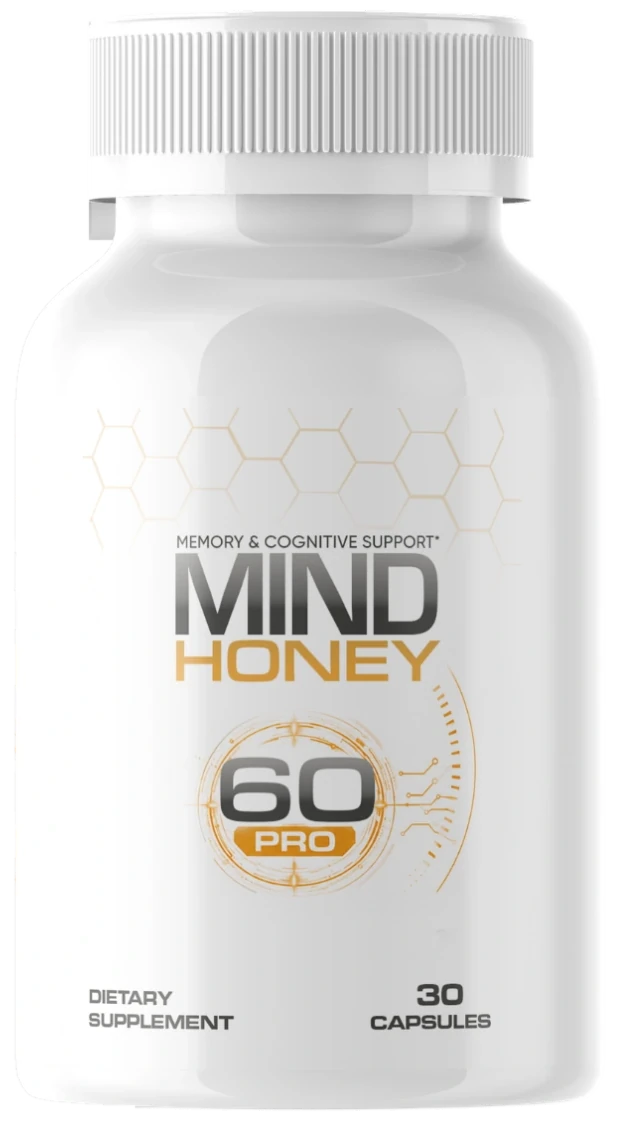
One capsule a day, 30 to a bottle, and 180 days from purchase to change your mind. The six-bottle pack is 180 days of capsules against a 180-day window, which is the same length.
Two bottles $158 · six bottles $294 · 180-day money-back guarantee
Order Mind Honey Pro On The Official WebsiteOne capsule a day · 30 per bottle · lot MIN-26/MI-4229
Where the four-to-eight-week figure comes from
The 4–8 weeks figure quoted across this website is the distributor's own summary of what buyers reported. It is not a measurement, it is not a trial result, and the reviews page says so at the top rather than the bottom.
It is still worth something, for two reasons. It sits inside the range the published literature used rather than outside it, which is more than some sellers' timelines manage. And it sets an expectation that discourages the week-two verdict.
Treat it as a planning figure rather than a promise. If you are going to decide, decide at eight weeks with a note in your hand.
The refund window as a decision clock
The 180-day guarantee is a purchase policy rather than a clinical timeline, and this is the one place where the two line up usefully.
At one capsule a day, two bottles is sixty days, three is ninety and six is a hundred and eighty. The window is 180 days from the date of purchase. So the six-bottle pack is the only one where the supply and the window are the same length, and the smaller packs leave room to spare.
The practical version: buy the pack that covers the window you actually intend to judge over, decide on a date, and put the date somewhere you will see it. The guarantee page covers what the window includes, and the refund policy covers the five steps.
- Two bottles: sixty days of capsules, well inside the window, and the only pack that pays for shipping.
- Three bottles: ninety days, free shipping, half the window still unused at the end.
- Six bottles: a hundred and eighty days, exactly the length of the window, with nothing in reserve.
- Whichever you choose, the decision date matters more than the pack size.
A four-line record anyone can keep
This takes under a minute a week and it is the difference between a decision and a feeling.
- The date you started, and the capsule count. One line, written on the bottle if nowhere else.
- One concrete task, described specifically. Written before the first capsule, not afterwards.
- A weekly mark out of ten on that task alone. Not on your memory in general, which will drift with your mood.
- Anything else that changed. A new medicine, a bad fortnight of sleep, a holiday. These are the confounders that would otherwise take the credit or the blame.
At eight weeks you will have eight marks and a list of confounders, which is a small dataset and an enormous improvement on remembering how the last two months felt.
When to stop
- If the capsule does not suit you physically, stop now. That is a three-day question, not an eight-week one.
- If eight weeks have passed and the marks are flat, that is an answer and it is worth acting on while the window is open.
- If the marks moved and the confounder list is empty, keep going and read them again at twelve weeks.
- If a new symptom appeared during the trial, that is a reason for an appointment rather than a reason to adjust the dose.
- If you are still taking it out of inertia at month six without ever having written anything down, stop and start again properly.
None of that requires anybody's permission and none of it costs anything. The refund window is long enough that a fair test and a full refund are not mutually exclusive, which is unusual in this category and is the strongest practical argument for it.
References
- Ostfeld I, Ben-Zeev T, Zamir A, et al. Role of Beta-Alanine Supplementation on Cognitive Function, Mood, and Physical Function in Older Adults; Double-Blind Randomized Controlled Study. Nutrients. 2023;15(4):923. PMID 36839281. https://pubmed.ncbi.nlm.nih.gov/36839281/
- Mendonca PT, Dutra YM, Antunes BM, et al. Fourteen weeks of beta-alanine supplementation and HIIT did not improve serum BDNF concentrations and Stroop test performance. Int J Sports Med. 2025;46(5):324-333. PMID 39832765. https://pubmed.ncbi.nlm.nih.gov/39832765/
- Babateen AM, Shannon OM, O'Brien GM, et al. Incremental Doses of Nitrate-Rich Beetroot Juice Do Not Modify Cognitive Function and Cerebral Blood Flow in Overweight and Obese Older Adults: A 13-Week Pilot Randomised Clinical Trial. Nutrients. 2022;14(5):1052. PMID 35268027. https://pubmed.ncbi.nlm.nih.gov/35268027/
- Teotia S, Rana AK, Gupta V, Gupta V. Comparison of the Safety and Efficacy of Oral L-arginine for the Treatment of Cognitive Impairment in Older Adults: A Prospective, Randomized, Placebo-Controlled Pilot Study. Cureus. 2026;18(7):e112987. PMID 42621366. https://pubmed.ncbi.nlm.nih.gov/42621366/
- Figueroa A, Dillon KN, Levitt DE, Kang Y. Citrulline Supplementation Improves Microvascular Function and Muscle Strength in Middle-Aged and Older Adults with Type 2 Diabetes. Nutrients. 2025;17(17):2790. PMID 40944179. https://pubmed.ncbi.nlm.nih.gov/40944179/