Mind Honey Pro Official Website › Blog › Beta-Alanine At 40 mg
Beta-Alanine At 40 mg, Against The Trials That Made Its Name
Beta-alanine is the last row on this panel and the smallest number on it. It also has the most interesting cognition evidence of any ingredient in the capsule, collected in exactly the age group this product is sold to, at sixty times the amount printed here.
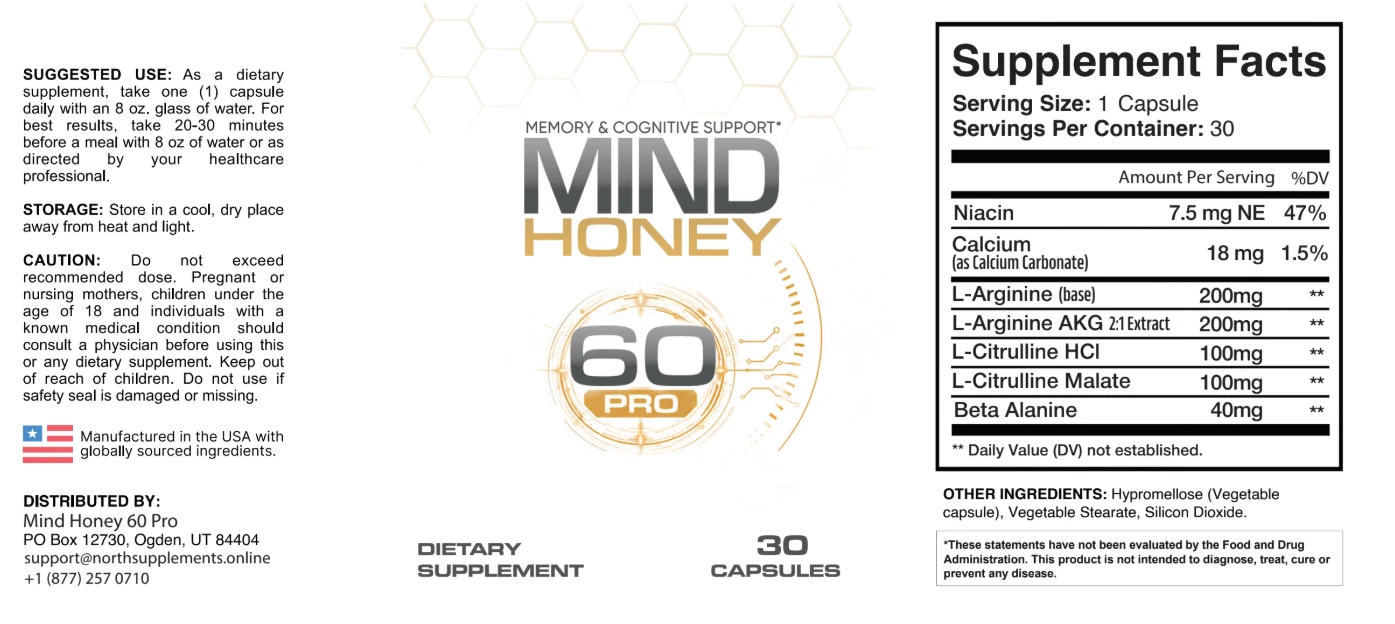
- The panel carries 40 mg of beta-alanine in a one-capsule serving, printed rather than folded into a blend.
- The one randomised trial that moved a cognitive score in older adults used 2.4 g a day for ten weeks.
- The standard loading protocol, set by a position stand rather than a single study, is 4 to 6 g a day.
- Beta-alanine is not a vasodilator and has nothing to do with the nitric-oxide story the other four amino acids on this panel belong to.
- Its characteristic effect, a harmless skin tingle, arrives at gram doses. At 40 mg nobody feels anything, which is the clearest signal available that the amount is small.
What beta-alanine actually is
Beta-alanine is an amino acid, and an unusual one: the body does not build proteins out of it. Its job is to be half of something else. Joined to histidine it forms carnosine, a dipeptide that accumulates in muscle tissue and, in smaller quantities, in the brain.
Carnosine is the interesting molecule and beta-alanine is the rate-limiting step in making it. Histidine is plentiful; beta-alanine is not. Supply more of it and carnosine rises, which is the whole premise and is not in dispute.
Where carnosine does its work
In muscle, carnosine buffers the acid that builds during hard, short efforts, which is why this ingredient came out of sports science and stayed there for twenty years. In nervous tissue the proposed roles are different: antioxidant activity, metal chelation and effects on neurotransmission, none of which is settled.
That divide explains almost every argument about beta-alanine. The muscle story is well evidenced and about sprinting. The brain story is newer, smaller and the reason the ingredient appears on a bottle like this one.
Why a sports ingredient reached a memory label
Two things happened. Carnosine turned out to be present in brain tissue and to do something there, and a research group decided to test the obvious question in the obvious population.
Before that, beta-alanine on a cognition panel would have been ingredient-list decoration. After it, the ingredient has a genuine claim to be there. What it does not have, at any amount, is a trial of this formula.
The trial that put it on a cognition panel
The Ostfeld trial is the one everything else rests on. It was double-blind, randomised and placebo-controlled, it ran in adults aged 60 to 80, it lasted ten weeks, and it reported on cognitive function, mood and physical function together.
The daily amount was 2.4 g. That is not a rounding difference from 40 mg; it is sixty times it, and the distance is the entire subject of this article.
The imaging follow-up from the same group went further and reported improved fractional anisotropy scores in the hippocampus and the amygdala in the same age band. Fractional anisotropy is a diffusion measure that tracks the organisation of white matter, and seeing it move in two structures involved in memory and emotion is a more specific result than a questionnaire score.
Both papers are small. Both come from one group. Neither has been replicated by another laboratory, and that is the honest state of the best evidence this ingredient has for the use it is being sold for here.
| Study | Daily amount | How long | What it measured |
|---|---|---|---|
| The ISSN position stand protocol | 4 to 6 g | 2 to 4 weeks | Muscle carnosine loading, the standard against which everything else is read |
| The Ostfeld trial in older adults | 2.4 g | 10 weeks | Cognitive function, mood and physical function in 60 to 80-year-olds |
| The imaging follow-up | 2.4 g | 10 weeks | Fractional anisotropy in the hippocampus and amygdala |
| The fourteen-week interval-training trial | 6.4 g | 14 weeks | Stroop performance and serum brain-derived neurotrophic factor |
| This bottle | 40 mg | One capsule a day | Nothing. No trial has been run on this formula |
Every figure in the middle column came from the methods section of the paper beside it, not from a summary of it.
What the standard protocol runs at
The International Society of Sports Nutrition position stand is the reference document for how this ingredient is dosed, and it sets 4 to 6 g a day for two to four weeks as the loading protocol. A position stand is a consensus reading of a whole literature rather than one study, which makes it a better yardstick than any single trial.
A Bayesian dose-response meta-analysis models how muscle carnosine actually rises against cumulative intake, and the shape of that curve is the useful part: the response is dose-dependent and it needs weeks of consistent grams, not days of milligrams.
So there are two independent standards in the literature and they agree with each other. The cognition trial used 2.4 g. The loading protocol uses 4 to 6 g. Nothing published sits anywhere near a tenth of a gram.
Reading the 40 mg row on this bottle
Here is what the arithmetic looks like written out, because a reader doing it in their head tends to under-estimate the distance.
| The comparison | The arithmetic |
|---|---|
| Against the lowest cognition dose, 2.4 g | Sixty times this amount |
| Against the bottom of the ISSN protocol, 4 g | One hundred times this amount |
| Against the top of it, 6 g | One hundred and fifty times this amount |
| Against a capsule holding about a gram of powder in total | A studied dose will not physically fit in one capsule |
The last row is the one that matters most, because it is a fact about capsules rather than about this brand.
The last row of that table is worth dwelling on, because it is not an accusation about this product. A gelatin or hypromellose capsule of ordinary size holds roughly a gram of powder. A studied dose of beta-alanine alone would fill four to six of them, before a single other ingredient was added.
Any once-a-day capsule containing beta-alanine, from any company, is therefore carrying a fraction of a studied amount. This bottle is unusual only in printing the fraction rather than burying it in a blend.
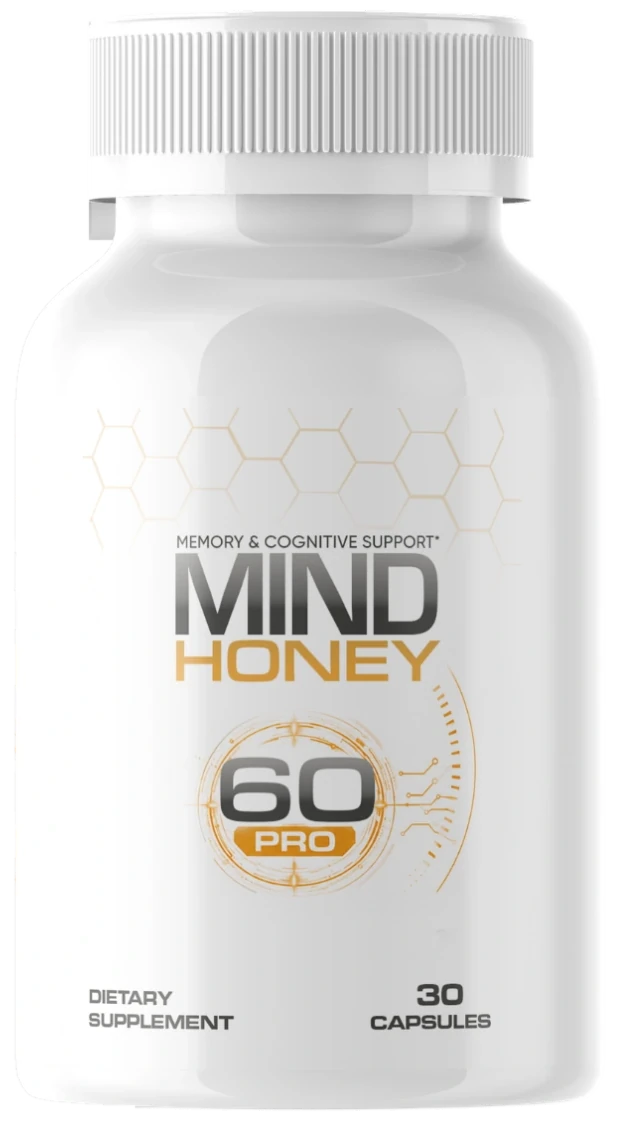
Mind Honey Pro prints the number this article is arguing with
Seven actives, an amount against every one of them, one capsule a day and 180 days from purchase to change your mind. The row above can be checked because the label published it.
Two bottles $158 · six bottles $294 · 180-day money-back guarantee
Order Mind Honey Pro On The Official WebsiteOne capsule a day · 30 per bottle · lot MIN-26/MI-4229
The tingle that does not arrive
Beta-alanine has a signature. At gram doses it produces paraesthesia, a prickling warmth across the face, neck and hands that starts twenty minutes or so after a dose and fades within the hour. It is harmless, it is well documented, and a systematic risk assessment covers it alongside the rest of the safety picture.
Weightlifters treat it as confirmation that a scoop was real. On a memory panel it is something more useful: a free, built-in dose meter.
Nobody taking this capsule will feel it, and that is not a defect to be apologised for. It is information. An ingredient whose characteristic effect is absent is present at an amount below the one that produces it, and here the label already told you so.
- The tingle appears reliably in the gram range and is the reason sustained-release forms exist at all.
- It has no relationship to whether the ingredient is working for anything cognitive.
- Its absence at 40 mg is expected and is consistent with everything else on this page.
- Anyone who does feel it after one capsule is reacting to something other than the beta-alanine in it.
The fourteen-week trial that found nothing
A page citing only the trials that worked has chosen its reading list rather than assembled it, so here is the one that did not.
A fourteen-week study combined beta-alanine at 6.4 g a day with high-intensity interval training and measured Stroop test performance and serum brain-derived neurotrophic factor. Neither moved.
That is a longer trial, at nearly three times the dose of the Ostfeld study, in a different population, measuring different outcomes. It does not cancel the positive result. It does establish that beta-alanine and cognition is an open question rather than a settled one, and anybody selling it as settled is ahead of the evidence.
Four changes that would line this row up
- Sixty times the amount. 2.4 g a day is the floor the cognition literature sits on, and it is the single change that would matter more than the other three combined.
- A serving that can carry it. Two grams of powder does not fit in one capsule, so the format would have to change to a scoop, a stick pack or four capsules a day.
- Ten weeks of consistency. Both cognition papers ran ten weeks. Carnosine loads slowly and a fortnight tells nobody anything.
- A replication from a second group. The two supportive papers share authors. An independent laboratory reporting the same thing would change this section entirely.
None of those four is within a retailer's gift, and none is offered here as a criticism that could be fixed by better copywriting. They are the conditions under which this row would stop being a name and start being a dose.
What the row is not being accused of
Three things, stated plainly, because the sections above are one-sided by design.
It is not an unsafe amount. Forty milligrams of an amino acid found in ordinary food is about as far from a safety question as a supplement ingredient gets.
It is not hidden. The figure is printed on the panel, in its own row, which is what makes every calculation on this page possible. A proprietary blend would have made this article unwritable.
And it is not pointless in the way an invented ingredient is pointless. Beta-alanine has a real mechanism and the best cognition evidence on this panel. The gap here is about quantity, which is a narrower and more honest complaint than most of this category deserves.
How much weight one row out of seven should carry
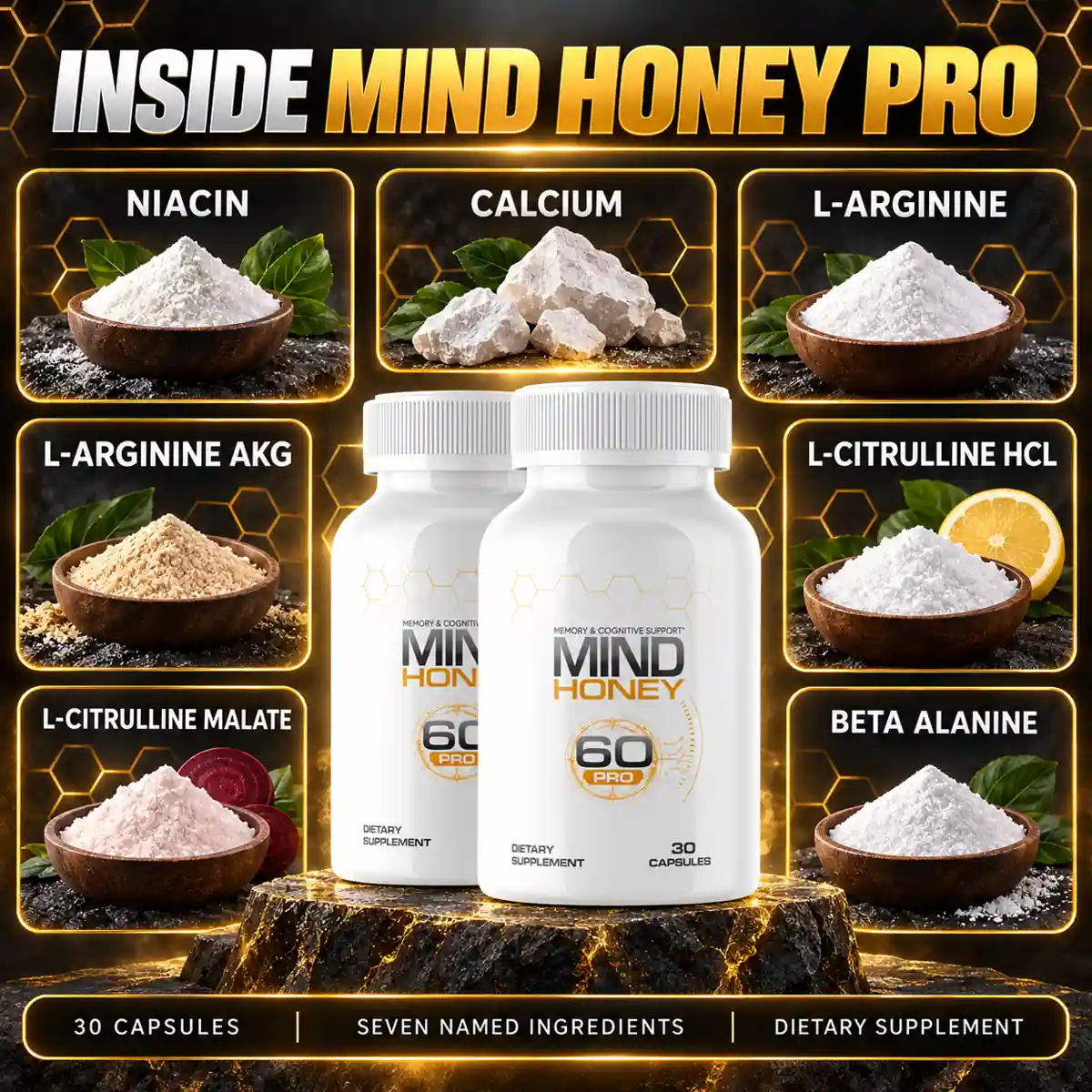
Not all of it. Beta-alanine is one of seven named actives and it is the smallest of them, and a reader who walks away from this page believing the whole bottle has been judged has read it too narrowly.
The panel's other rows are a separate argument with separate numbers. Niacin at 47% of a Daily Value is a nutritionally real amount and it carries the only cognition literature here that was collected in ordinary older people. The four nitric-oxide rows have their own arithmetic, done in the article on why they get two rows each.
What this row establishes is a habit rather than a verdict: find the trial dose, put it beside the label amount, and let the distance between them mean what it means. The ingredients page does that for all seven rows at once.
References
- Trexler ET, Smith-Ryan AE, Stout JR, et al. International society of sports nutrition position stand: Beta-Alanine. J Int Soc Sports Nutr. 2015;12:30. PMID 26175657. https://pubmed.ncbi.nlm.nih.gov/26175657/
- Ostfeld I, Ben-Zeev T, Zamir A, et al. Role of Beta-Alanine Supplementation on Cognitive Function, Mood, and Physical Function in Older Adults; Double-Blind Randomized Controlled Study. Nutrients. 2023;15(4):923. PMID 36839281. https://pubmed.ncbi.nlm.nih.gov/36839281/
- Ostfeld I, Zamir A, Ben-Zeev T, et al. Beta-Alanine supplementation improves fractional anisotropy scores in the hippocampus and amygdala in 60-80-year-old men and women. Exp Gerontol. 2024;194:112513. PMID 38971131. https://pubmed.ncbi.nlm.nih.gov/38971131/
- Rezende NS, Swinton P, de Oliveira LF, et al. The Muscle Carnosine Response to Beta-Alanine Supplementation: A Systematic Review With Bayesian Individual and Aggregate Data E-Max Model and Meta-Analysis. Front Physiol. 2020;11:913. PMID 32922303. https://pubmed.ncbi.nlm.nih.gov/32922303/
- Mendonca PT, Dutra YM, Antunes BM, et al. Fourteen weeks of beta-alanine supplementation and HIIT did not improve serum BDNF concentrations and Stroop test performance. Int J Sports Med. 2025;46(5):324-333. PMID 39832765. https://pubmed.ncbi.nlm.nih.gov/39832765/
- Dolan E, Swinton PA, Painelli VS, et al. A Systematic Risk Assessment and Meta-Analysis on the Use of Oral Beta-Alanine Supplementation. Adv Nutr. 2019;10(3):452-463. PMID 30980076. https://pubmed.ncbi.nlm.nih.gov/30980076/